Grill with Docs Skill: Better AI Context
If you’ve ever dumped a vague feature request into an AI coding agent and gotten back something totally off-base, you know the problem: garbage in, garbage out. The output your agent produces is only as good as the context you hand it. The Grill with Docs skill fixes that by forcing a structured, thorough conversation before Claude Code writes a single line of code. By the end of the session you walk away with a shared glossary, an architectural decision record, and a full product requirements document — all generated automatically.
The Problem With Vague AI Prompts
I’m working on a Node.js Express blog API, and I wanted to add a tagging feature — tags on create and update, plus filtering by tag on the list endpoint. If I’d just thrown that prompt straight into an AI model, it probably wouldn’t have given me great results, because the prompt lacks specificity and context. That’s the gap the Grill with Docs skill is built to close.
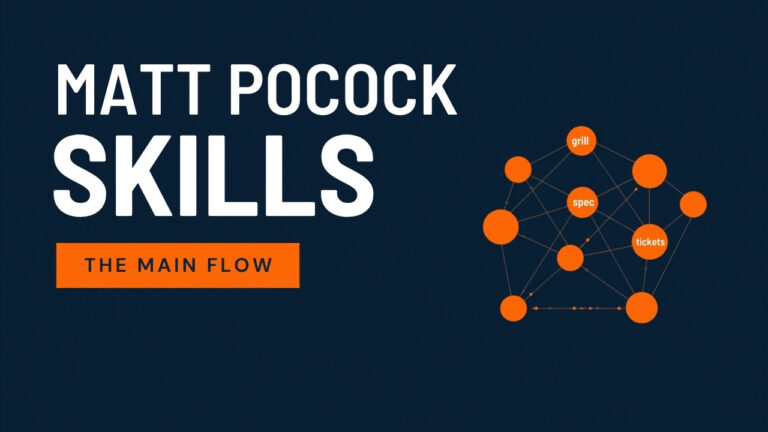
Instead of hoping the model fills in the blanks correctly, you give it a process for extracting the missing details before any code gets written. It comes from Matt Pocock’s skill repository, installed with a single NPX command, and it works like an interview: relentless, thorough, and focused on getting everyone — you and the AI — onto the same page before implementation starts.
What the Grill with Docs Skill Actually Produces
Grill with Docs doesn’t just interview you — it writes down what it learns. First, it creates a context.md file with a glossary of terms, applying the software engineering idea of ubiquitous language: making sure a term means the same thing to the business owner and the engineer.
Second, when a decision is hard to reverse, would be surprising without context, and involves a genuine trade-off, the skill writes an architectural decision record (ADR). In my case that meant an ADR about how to handle uncurated tags, including the trade-offs and the alternatives that got rejected. If a decision doesn’t sit right after reading the ADR, you can tell Claude to revisit it before moving forward.
Turning the Conversation Into a PRD
Once the grilling session is done, you still need a plan. That’s where the two-PRD skill comes in — a separate tool from the same skills library that turns the conversation you just had into a full product requirements document. It doesn’t interview you again; it synthesizes what’s already been discussed and can submit the result as a GitHub issue, or you can save it straight into a docs folder, which is what I do. From there, the PRD becomes the source of truth for whatever comes next: breaking the feature into issues, writing an implementation plan, or handing it off to sub-agents.
Why the Extra Step Is Worth It
None of this is about slowing yourself down before you start coding. It’s about eliminating the back-and-forth, wrong assumptions, and rework that come from jumping straight into implementation. The context.md file, the ADRs, and the feature PRD aren’t just paperwork — they become the foundation for your issues, your implementation plan, and ultimately your code.
Key Takeaways
- Vague prompts produce vague AI output, so the quality of your context sets the ceiling on what Claude Code can build.
- The Grill with Docs skill interviews you about the feature until it and you reach a shared understanding, then documents that understanding in a context.md glossary.
- When a decision is hard to reverse, surprising without context, and involves a real trade-off, Grill with Docs writes an architectural decision record so you can review or challenge it later.
- The two-PRD skill turns the grilling conversation into a full product requirements document without a second interview, giving you a single source of truth to hand off to an implementation plan or a set of GitHub issues.
- The upfront interview isn’t wasted time — it removes the wrong assumptions and rework that usually show up two weeks into an “AI-generated” feature.
The core idea here isn’t complicated: an AI agent can only build what you’ve actually specified, and the Grill with Docs skill forces that specification to happen before code exists — not after a rewrite. Pair the interview with a context.md glossary, an ADR when trade-offs matter, and a PRD to hand off, and you get an implementation you can actually stand behind.