Mastering TypeScript Generics for Reusable, Type-Safe Code
Generics are a fundamental feature of statically-typed languages. They allow developers to pass types as parameters to another type, function, or structure.
Stop struggling with messy Node.js code. Discover how to use TypeScript interfaces and inheritance to build scalable, maintainable projects. Learn senior-level strategies to enforce structure and reuse code efficiently.
tructure your Node.js projects for scalability. Learn how TypeScript classes enable Object-Oriented Programming (OOP) for type-safe, modular code.
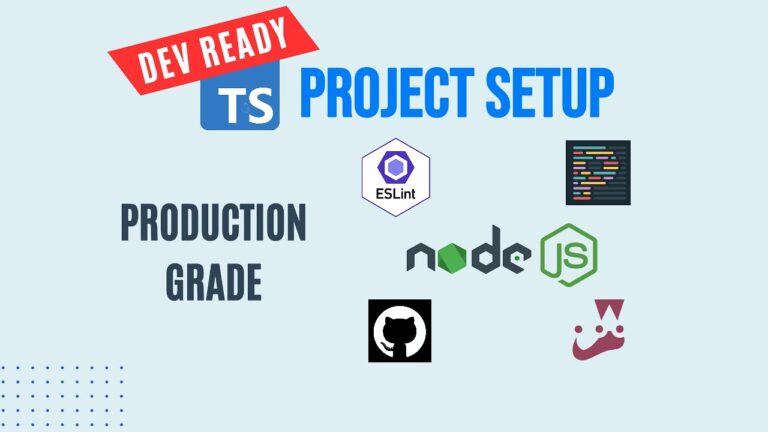
Learn the essential steps to set up a robust TypeScript Node.js project from scratch, including Jest testing, ESLint/Prettier configuration, and development automation.
Discover how using Entities to encapsulate business logic and DTOs (Data Transfer Objects) to control data exposure creates secure, scalable, and maintainable API architecture.
Ports & Adapters pattern, also known as Hexagonal Architecture helps decouple business logic from external dependencies, making your app flexible, testable, and future-proof.
In this guide, I’ll show you exactly how to enable source maps in a Node.js environment. By the end of this post, you’ll be able to transform your stack traces from cryptic compiled nonsense into clear references to your original code.
Is your API struggling with pagination? Are your queries getting slower as your dataset grows? If you’re still using offset-based pagination, that might be the culprit.
Struggling with pagination in your Node.js REST API? Offset pagination can make it simple to fetch data efficiently while keeping your backend scalable and responsive.
Do you want to build a clean, scalable, and maintainable backend architecture for your Node.js projects? In this post, we’ll explore how to implement the Repository Pattern using TypeScript and Prisma ORM.